Showing posts with label 2011 NYT Most Notable. Show all posts
Saturday, March 23, 2013
Freedom - by Jonathan Franzen
The main character of this large book appears to be Patty Berglund. Her husband Walter figures prominently as well, as do several other characters. But Patty is the only one who gets to write portions of her own "autobiography", oddly in the third person.
Patty was an athletic young girl who got knocked off the track to a basketball career when she injured her knee. She changed her dreams, married Walter, had children, did her best to become a super housewife. She knew all along that she was not as nice as others thought she was, but there was much she did not know about herself.
Patty was originally attracted to Walter's best friend, Richard Katz. Katz was a musician, womanizer, who initially did not respond to Patty's hints. Patty, however, found herself increasingly attracted to Walter anyway. Walter was almost an anti-Richard. Thin, geeky, an environmentalist. Something in him, though, responded to something in Patty, the ex-athlete who was not much aware of the environment.
We follow Patty and Walter through many years, dipping into the lives of their children and parents as well. Until comes a time when something has gone out of their marriage and Patty is dissatisfied in general. She has become less and less fun to be around for just about everyone. In spite of which Richard is drawn to her.
What is "freedom" in this context? The freedom to do as we please? The freedom to be away from others, to be alone? We watch as Richard continues his self-destructive life, as free as can be. We see Patty and Walter's son free himself from the nest, then later engage make some questionable choices in his career, free from interference. Patty and Walter live their own lives, essentially free of each other.
Some reviewers have called this a novel of its time, and as I think of it I can agree. In a way, it sums up life today in the US for many in the upper middle class in a way that reminds me of John Cheever. There is a lot of humor but underlying that is real warmth. Something you don't see so much in Cheever.
Labels:
2011 ALA,
2011 NYT Most Notable,
2011 PW Best Books,
Judith
Friday, May 25, 2012
Buddha in the Attic - Wendy's Review
On the boat we were mostly virgins.
We had long black hair and flat wide feet and we were not very tall.
Some of us had eaten nothing but rice gruel as young girls and had
slightly bowed legs, and some of us were only fourteen years old and
were still young girls ourselves. – from Buddha in the Attic, page 1 -
It is the early part of the twentieth century and young girls from Japan are arriving in San Francisco as “picture brides.” Their husbands have been chosen by a matchmaker in Japan, selected only by a photo and vague promises in scrawled letters. For the girls on the boat, their futures seem bright. But nothing is ever really as it seems.
Unfolding over many years and written in the collective first person plural narrative, Julie Otsuka reveals the lives of these young women as they meet their husbands for the first time, bear children and find work in their communities. Culminating in the bigoted years of World War II when thousands of Japanese Americans were rounded up and torn from their homes, Buddha in the Attic is a powerful look at one aspect of the immigrant experience in America.
In the end, the voices of these women disappear and are replaced by the collective voice of the community they left behind.
This slim book delivers on every level. It should be required reading in history classes.
Highly recommended.

FTC Disclosure: I purchased this book.
Join the discussion at Bookies Too from June 1-15, 2012.
Awards for this book:
It is the early part of the twentieth century and young girls from Japan are arriving in San Francisco as “picture brides.” Their husbands have been chosen by a matchmaker in Japan, selected only by a photo and vague promises in scrawled letters. For the girls on the boat, their futures seem bright. But nothing is ever really as it seems.
Unfolding over many years and written in the collective first person plural narrative, Julie Otsuka reveals the lives of these young women as they meet their husbands for the first time, bear children and find work in their communities. Culminating in the bigoted years of World War II when thousands of Japanese Americans were rounded up and torn from their homes, Buddha in the Attic is a powerful look at one aspect of the immigrant experience in America.
There was talk of a list. Some people being taken away in the middle of the night. A banker who went to work and never came home. A barber who disappeared during his lunch break. A few fishermen who had gone missing. Here and there, a boardinghouse, raided. A business, seized. A newspaper shut down. – from Buddha in the Attic, page 81 -Otsuka’s decision to use first person plural as her narrative voice is unusual and haunting. Instead of an individual point of view, the novella presents the collective perspective of a community joined by ancestry and common experience. What Otsuka does well is tease out individuals from the group, sharing their differences and then pulling them back together as one voice. The result is a story which builds to a powerful conclusion. More than just a story of one person, this is a story of a generation of immigrant women who arrived in America with hope and discovered the reality was not exactly what they expected.
In the end, the voices of these women disappear and are replaced by the collective voice of the community they left behind.
The Japanese have disappeared from our town. Their houses are boarded up and empty now. Their mailboxes have begun to overflow. Unclaimed newspapers litter their sagging front porches and gardens. Abandoned cars sit in their driveways. Thick knotty weeds are sprouting up through their lawns. In their backyards the tulips are wilting. Stray cats wander. Last loads of laundry still cling to the line. In one of their kitchens – Ei Saito’s – a black telephone rings and rings. – from Buddha in the Attic, page 115 -This is a book which grows more powerful after the final page has been turned. I have found myself thinking of these women, their stories, their community, their ultimate fate…and their voices echo in my head. It is hard to turn away from them. I was left with the feeling that the community they inhabited is less now in their absence…and I think this is, perhaps, the message which Otsuka wanted her readers to get.
This slim book delivers on every level. It should be required reading in history classes.
Highly recommended.
FTC Disclosure: I purchased this book.
Join the discussion at Bookies Too from June 1-15, 2012.
Awards for this book:
- 2012 PEN/Faulkner winner
- 2011 National Book Award finalist
- 2011 New York Times Most Notable book
Saturday, May 12, 2012
The Submission - Wendy's Review
“[...]The attack made everyone afraid of appearing unpatriotic, of questioning government leaders. Fear has justified war, torture, secrecy, all kinds of violations of rights and liberties. Don’t let it justify taking the memorial away from Khan. Everything these past couple of years has been about abdications. Don’t succumb to the fear; don’t mistake the absolutism of Khan’s opponents for morality…” -from The Submission, page 226 -
Two years after the 9-11 tragedy, a group of jurors has been selected to choose a memorial design to occupy the space where the twin towers once stood. The jurors include art critics and one family member still reeling from the death of her husband. The submissions are anonymous to the jurors – they have only the designs and no names to make their final decision. After a contentious process, one design is finally chosen and the name of the designer is finally revealed…Mohammad Khan, an American born Muslim. Khan’s selection ignites a firestorm of protest. Should a Muslim be allowed to design this memorial which touches the hearts of so many Americans? Does one’s religion define who they are? Thus begins Amy Waldman’s provocative and deeply emotional novel.
Told in multiple points of view, The Submission takes a searing look at one of the most traumatic events in American history and examines our prejudices and fears seated in religious ideology, patriotism, and collective grief. Claire Burwell, the lone family member on the jury, is a complex character who initially fights for Khan’s design. But political pressure and media propaganda work on her emotions, making her doubt her convictions. Khan himself is an enigmatic character – a man who doubts his religion and then discovers it matters not what he believes so much as the label attached to him.
What was he trying to see? He had been indifferent to the buildings when they stood, preferring more fluid forms to their stark brutality, their self-conscious monumentalism. But he had never felt violent toward them, as he sometimes had toward that awful Verizon building on Pearl Street. Now he wanted to fix their image, their worth, their place. They were living rebukes to nostalgia, these Goliaths that had crushed small businesses, vibrant streetscapes, generational continuities, and other romantic notions beneath their giant feet. Yet it was nostalgia he felt for them. A skyline was a collaboration, if an inadvertent one, between generations, seeming no less natural than a mountain range that had shuddered up from the earth. This new gap in space reversed time. – from The Submission, page 32 -Waldman includes several engaging characters including a rabid journalist who is willing to twist the truth for a story, a power-hungry politician who finds the controversy is very good for votes, a radical anti-Islamic extremist, and a Muslim woman who is in America illegally and who is mourning her husband who worked as a janitor in the doomed towers.
This is an affecting novel which uses one question to propel its complicated plot. I found the title itself to be fascinating as it alludes to not only the design which is “the submission,” but also examines the process of judgement and the struggle for a common ground which unfurls throughout the novel. Synonyms for the word submission include: appeasement, assent, backing down, giving in, humility, resignation, and surrender. And, indeed, these are words which resonate in the story. Khan is forced to examine his motivations for submitting his design in the face of pressure to step down and give up the commission.
Waldman also explores creative inspiration. From where do our artistic renderings come? Is inspiration a simple process, or does it encompass experience, ideology and something less tangible which is difficult to define? Some characters in The Submission insist on labeling Khan’s design as anti-American and read intent where none may exist. Khan himself seems, at times, to wrestle with the origins of his work – what exactly was the inspiration?
The Submission is compelling fiction and would be a terrific book club choice. It was recently nominated for the Orange Prize for Fiction and I believe it deserves that nomination. Waldman writes with clarity and passion and challenges readers, especially Americans, to look deep within themselves about essential questions related to religion, politics and fear.
Highly recommended.
- Quality of Writing:
- Characters:
- Plot:
11/22/63 - Wendy's Review
I knew where I was; Lisbon Falls, Maine, deep in the heart of Androscoggin County. The real question was when I was. – from 11/22/63, page 31 -
Jake Epping is thirty-five years old, a high school teacher living in Maine in the year 2011. Jake makes a little extra money teaching GED classes and he meets a janitor named Harry – a soft-spoken man whose essay about the murder of his mother and siblings in 1958 blows Jake away. So when Al, a friend of Jake’s who owns a local restaurant, reveals a “rabbit hole” to the past, Jake takes it. What unfolds is travel back in time to the late 1950′s, just over four years before JFK is assassinated. Jake has the power to change the past, but will it make the future better, or worse?
Stephen King’s latest novel, 11/22/63, is a sprawling doorstopper filled with realistic characters and plenty of “what-ifs.” He takes the reader back to a time in history when gas was cheap, racism was rampant, women’s rights were just beginning to be glimpsed, and people left their doors unlocked. There is no Internet, no terrorists, no hyped up airport security. As Jake navigates this world from the past, he must live two lives – one as an affable school teacher and another as a man from the future who plans on changing history forever.
In true King fashion, readers will recognize characters from previous novels. Jake spends a bit of time in Derry, Maine – the town where It was set – and the “clown murders” are still being talked about there. Derry is still not quite right with the stench of industry and the dark Barrens where the sewers empty.
But the focus of the book actually takes place in Dallas and just outside of that city. King spends a lot of time creating Jake’s alternate life there, introducing dozens of characters and intertwining their stories. Sadie, a school librarian, becomes a central character in the story, a twist that makes the plot less predictable.
Thematically, King explores the idea of history repeating itself, the sense that things happen for a reason, and the danger of trying to change history. The Butterfly Effect, the idea that small change at one place in a nonlinear system can result in large differences to a later state, becomes a major theme in the novel.
It was clear to me that King spent a lot of time researching for this book – the history, politics, and sociology of the times is staggering in its detail. That detail allows the reader to become fully immersed in the story and transports her back in time.
King is truly a master storyteller. It has been a long time since I have read one of his novels – but I was instantly reminded why I have always loved his books. The characters leap from the pages, fully formed and believable. Despite this being a time-travel book, something which is clearly outside reality, I found myself firmly believing the premise. And this is what King does best – he engages his audience, takes them places where they might not travel themselves, and convinces them this could happen.
My only criticism is that I think the novel could have been edited down by about 200 pages. But, this is Stephen King, not only a master storyteller, but the king of the chunkster…and so, this minor quibble should not deter anyone from picking up a copy of 11/22/63. Despite its heft, the novel is intriguing enough to keep even the most distracted reader turning the pages.
Readers of horror, historical fiction, and time travel novels, as well as those who have loved Stephen King’s work in the past, will not want to miss 11/22/63.
Highly recommended.
- Quality of Writing:
- Characters:
- Plot:
Monday, March 19, 2012
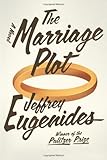
The Marriage Plot by Jeffrey Eugenides
Been a long time since I posted here, but I noticed I recently did read a Notable Book. Crossposted from Aquatique:
I have read both of Eugenides's other books: The Virgin Suicides and Middlesex. In fact, I liked the latter so much, I even own after having it seen it discounted at Chapters. I don't really buy new books often. I have enjoyed his work. It's really in the characters, prose and to a certain extent, how good Eugenides is about writing about gender and relationships. With TVS, the characters seem both real and mythical. That worked was definitely filled with nostalgia and a surreality. But it was in Middlesex in which I found him to be a very good writer. The characters in it were believable, good and real. In the Marriage Plot and in Middlesex especially, he deals with sex, gender, feminism, and these ideas in Western society. I don't mean to say he is very political about it, but he shows an understanding of these topics or the awareness of it between cultures. There's a moment in Paris where one of the main characters sees a woman (p.157):
The book is one largely about relationships, desire, unrequited love and being in love, both good and bad: "What was interesting about being the needy one was how much in love you felt" (p 25) Which isn't all about how love is, but it does describe the early rush of it and that neediness you feel to be with the other person.
Furthermore, Eugenides has touched on mental illness lightly before, but he tackles it much more in this book as one of the characters seems clinically depressed and the consequences on the other characters, both direct and indirect.
There isn't a lot of plot in Eugenides books, but it's not as slow moving as some other novels. I think like many good stories, there is actual growth or movement for all the characters, but like life, it's not perfect. The ending was sort of meta and fitting. Maybe a bit abrupt, but somewhat realistic and showed a lot of growth in all the characters.
I have read both of Eugenides's other books: The Virgin Suicides and Middlesex. In fact, I liked the latter so much, I even own after having it seen it discounted at Chapters. I don't really buy new books often. I have enjoyed his work. It's really in the characters, prose and to a certain extent, how good Eugenides is about writing about gender and relationships. With TVS, the characters seem both real and mythical. That worked was definitely filled with nostalgia and a surreality. But it was in Middlesex in which I found him to be a very good writer. The characters in it were believable, good and real. In the Marriage Plot and in Middlesex especially, he deals with sex, gender, feminism, and these ideas in Western society. I don't mean to say he is very political about it, but he shows an understanding of these topics or the awareness of it between cultures. There's a moment in Paris where one of the main characters sees a woman (p.157):
When Mitchell looked at her; the girl did an amazing thing: she looked back. She met his gaze with frank meaning. Not that she wanted to have sex with him, necessarily. Only that she was happy to acknowledge, on this late-summer evening, that he was a man and she was a woman, and if he found her attractive, that was all right with her. No American girl had ever looked at Mitchell like that.
The book is one largely about relationships, desire, unrequited love and being in love, both good and bad: "What was interesting about being the needy one was how much in love you felt" (p 25) Which isn't all about how love is, but it does describe the early rush of it and that neediness you feel to be with the other person.
Furthermore, Eugenides has touched on mental illness lightly before, but he tackles it much more in this book as one of the characters seems clinically depressed and the consequences on the other characters, both direct and indirect.
There isn't a lot of plot in Eugenides books, but it's not as slow moving as some other novels. I think like many good stories, there is actual growth or movement for all the characters, but like life, it's not perfect. The ending was sort of meta and fitting. Maybe a bit abrupt, but somewhat realistic and showed a lot of growth in all the characters.
Wednesday, November 23, 2011
New York Times (NYT) Most Notable - 2011
Read more about each book (including links to NYT reviews) on this page.
FICTION AND POETRY
THE ANGEL ESMERALDA: Nine Stories.By Don DeLillo.
THE ART OF FIELDING. By Chad Harbach.
THE BARBARIAN NURSERIES. By Héctor Tobar.
BIG QUESTIONS. Or, Asomatognosia: Whose Hand Is It Anyway? Written and illustrated by Anders Brekhus Nilsen.
THE BUDDHA IN THE ATTIC. By Julie Otsuka.
CANTI. By Giacomo Leopardi. Translated by Jonathan Galassi.
THE CAT’S TABLE. By Michael Ondaatje.
CHANGÓ’S BEADS AND TWO-TONE SHOES. By William Kennedy.
COME ON ALL YOU GHOSTS. By Matthew Zapruder.
11/22/63. By Stephen King.
THE FREE WORLD. By David Bezmozgis.
GHOST LIGHTS. By Lydia Millet.
THE GRIEF OF OTHERS. By Leah Hager Cohen.
GRYPHON: New and Selected Stories. By Charles Baxter.
HOUSE OF HOLES: A Book of Raunch. By Nicholson Baker.
THE LAST WEREWOLF. By Glen Duncan.
THE LEFTOVERS. By Tom Perrotta.
LIFE ON MARS. By Tracy K. Smith.
THE LONDON TRAIN. By Tessa Hadley
LONG, LAST, HAPPY: New and Selected Stories. By Barry Hannah.
LOST MEMORY OF SKIN. By Russell Banks.
THE MARRIAGE PLOT. By Jeffrey Eugenides.
A MOMENT IN THE SUN. By John Sayles.
MR. FOX. By Helen Oyeyemi.
MY NEW AMERICAN LIFE. By Francine Prose.
1Q84. By Haruki Murakami. Translated by Jay Rubin and Philip Gabriel.
OPEN CITY. By Teju Cole.
THE PALE KING: An Unfinished Novel. By David Foster Wallace.
PARALLEL STORIES. By Peter Nadas. Translated by Imre Goldstein.
SAY HER NAME. By Francisco Goldman.
SCENES FROM VILLAGE LIFE. By Amos Oz. Translated by Nicholas de Lange
THE SENSE OF AN ENDING. By Julian Barnes.
SEVEN YEARS. By Peter Stamm. Translated by Michael Hofmann.
SHARDS. By Ismet Prcic.
SPACE, IN CHAINS. By Laura Kasischke.
STONE ARABIA. By Dana Spiotta.
THE STRANGER’S CHILD. By Alan Hollinghurst.
THE SUBMISSION. By Amy Waldman.
SWAMPLANDIA! By Karen Russell.
TALLER WHEN PRONE: Poems. By Les Murray.
TEN THOUSAND SAINTS. By Eleanor Henderson.
THIS BEAUTIFUL LIFE. By Helen Schulman.
THE TIGER’S WIFE. By Téa Obreht.
THE TRAGEDY OF ARTHUR. By Arthur Phillips.
TRAIN DREAMS. By Denis Johnson.
NON-FICTION
AND SO IT GOES. Kurt Vonnegut: A Life. By Charles J. Shields.
ARGUABLY: Essays. By Christopher Hitchens.
THE ART OF CRUELTY: A Reckoning. By Maggie Nelson.
ASSASSINS OF THE TURQUOISE PALACE. By Roya Hakakian.
THE BEGINNING OF INFINITY: Explanations That Transform the World. By David Deutsch.
BELIEVING IS SEEING: Observations on the Mysteries of Photography. By Errol Morris.
THE BETTER ANGELS OF OUR NATURE: Why Violence Has Declined. By Steven Pinker.
BLOOD, BONES AND BUTTER: The Inadvertent Education of a Reluctant Chef. By Gabrielle Hamilton.
BLUE NIGHTS. By Joan Didion.
THE BOY IN THE MOON: A Father’s Journey to Understand His Extraordinary Son. By Ian Brown.
CARAVAGGIO: A Life Sacred and Profane. By Andrew Graham-Dixon.
CATHERINE THE GREAT: Portrait of a Woman. By Robert K. Massie.
CLARENCE DARROW: Attorney for the Damned. By John A. Farrell.
COCKTAIL HOUR UNDER THE TREE OF FORGETFULNESS. By Alexandra Fuller.
DESTINY OF THE REPUBLIC: A Tale of Madness, Medicine, and the Murder of a President. By Candice Millard.
THE ECSTASY OF INFLUENCE: Nonfictions, Etc. By Jonathan Lethem.
1861: The Civil War Awakening. By Adam Goodheart.
EXAMINED LIVES: From Socrates to Nietzsche. By James Miller.
1493: Uncovering the New World Columbus Created. By Charles C. Mann.
GEORGE F. KENNAN: An American Life. By John Lewis Gaddis.
GREAT SOUL: Mahatma Gandhi and His Struggle With India. By Joseph Lelyveld.
HARLEM IS NOWHERE: A Journey to the Mecca of Black America. By Sharifa Rhodes-Pitts. (Little, Brown, $24.99.)
HOLY WAR: How Vasco da Gama’s Epic Voyages Turned the Tide in a Centuries-Old Clash of Civilizations. By Nigel Cliff.
IN THE GARDEN OF BEASTS: Love, Terror, and an American Family in Hitler’s Berlin. By Erik Larson.
INFERNO: The World at War, 1939-1945. By Max Hastings.
THE INFORMATION: A History. A Theory. A Flood. By James Gleick.
INSIDE SCIENTOLOGY: The Story of America’s Most Secretive Religion. By Janet Reitman.
IS THAT A FISH IN YOUR EAR? Translation and the Meaning of Everything. By David Bellos.
JERUSALEM: The Biography. By Simon Sebag Montefiore.
THE KEATS BROTHERS: The Life of John and George. By Denise Gigante.
KNOCKING ON HEAVEN’S DOOR: How Physics and Scientific Thinking Illuminate the Universe and the Modern World. By Lisa Randall.
MALCOLM X: A Life of Reinvention. By Manning Marable.
THE MEMORY CHALET. By Tony Judt.
MIDNIGHT RISING: John Brown and the Raid That Sparked the Civil War. By Tony Horwitz.
MOBY-DUCK: The True Story of 28,800 Bath Toys Lost at Sea and of the Beachcombers, Oceanographers, Environmentalists, and Fools, Including the Author, Who Went in Search of Them. By Donovan Hohn.
MY SONG: A Memoir. By Harry Belafonte with Michael Shnayerson.
THE NET DELUSION: The Dark Side of Internet Freedom. By Evgeny Morozov.
ONE DAY I WILL WRITE ABOUT THIS PLACE: A Memoir. By Binyavanga Wainaina.
THE ORIGINS OF POLITICAL ORDER: From Prehuman Times to the French Revolution. By Francis Fukuyama.
PAULINE KAEL: A Life in the Dark. By Brian Kellow.
PULPHEAD. By John Jeremiah Sullivan.
THE QUEST: Energy, Security, and the Remaking of the Modern World. By Daniel Yergin.
RIGHTS GONE WRONG: How Law Corrupts the Struggle for Equality. By Richard Thompson Ford.
RIN TIN TIN: The Life and the Legend. By Susan Orlean.
[SIC]: A Memoir. By Joshua Cody.
THE STORM OF WAR: A New History of the Second World War. By Andrew Roberts.
THE SWERVE: How the World Became Modern. By Stephen Greenblatt.
THINKING, FAST AND SLOW. By Daniel Kahneman.
TO A MOUNTAIN IN TIBET. By Colin Thubron.
TO END ALL WARS: A Story of Loyalty and Rebellion, 1914-1918. By Adam Hochschild.
A TRAIN IN WINTER: An Extraordinary Story of Women, Friendship, and Resistance in Occupied France. By Caroline Moorehead.
VAN GOGH: The Life. By Steven Naifeh and Gregory White Smith.
WHO’S AFRAID OF POST-BLACKNESS? What It Means to Be Black Now. By Touré.
WHY THE WEST RULES — FOR NOW: The Patterns of History, and What They Reveal About the Future. By Ian Morris.
A WORLD ON FIRE: Britain’s Crucial Role in the American Civil War. By Amanda Foreman.
Subscribe to:
Posts (Atom)